How Much Does Wasp Nest Removal Cost in Cambridge?
£90 Fixed Cost
Professional treatment of an active nest, wherever it is on the property.
Read the guide →£220 First Room, £60 Each After
£220 for the first room, £60 for each one after — and the single most useful thing to know is that the moths flying around the room are not the ones eating your carpet.
Carpet moth and carpet beetle treatment in Cambridge is £220 for the first room and £60 for each additional room. The same price covers both, because they damage the same materials in the same places and the treatment addresses both.
| Rooms affected | Total |
|---|---|
| 1 room | £220 |
| 2 rooms | £280 |
| 3 rooms | £340 |
| 4 rooms | £400 |
| 5 rooms | £460 |
The first room carries the survey, the set-up and the travel; every room after it is treatment time alone, which is why it drops to £60.
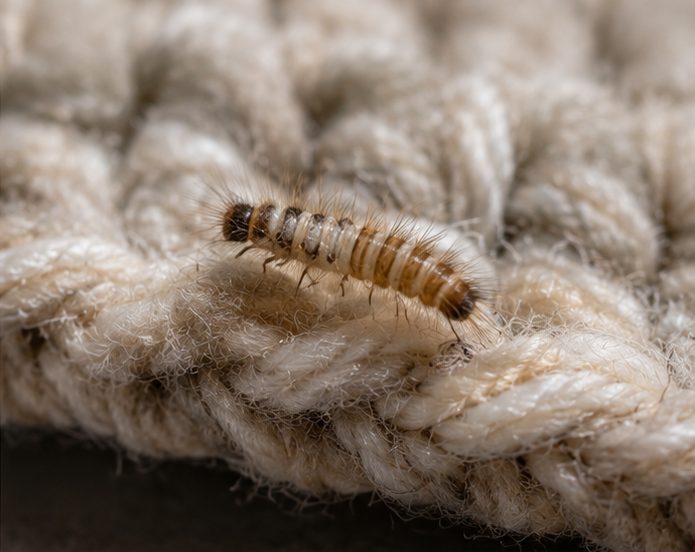
Both are covered by the same treatment and the same price, so you do not need to know before you call us. But it is worth being able to tell, because the beetles are far more often missed.
| Carpet moth | Carpet beetle | |
|---|---|---|
| What does the damage | Larvae | Larvae |
| The larva | Pale, grub-like, often in a silken case | Short, brown and bristly — the “woolly bear” |
| The damage itself | Grazed patches with silken webbing | Small clean holes, no webbing at all |
| What else you find | Fine debris in the pile | Powdery droppings and shed bristly skins, often more visible than the larvae |
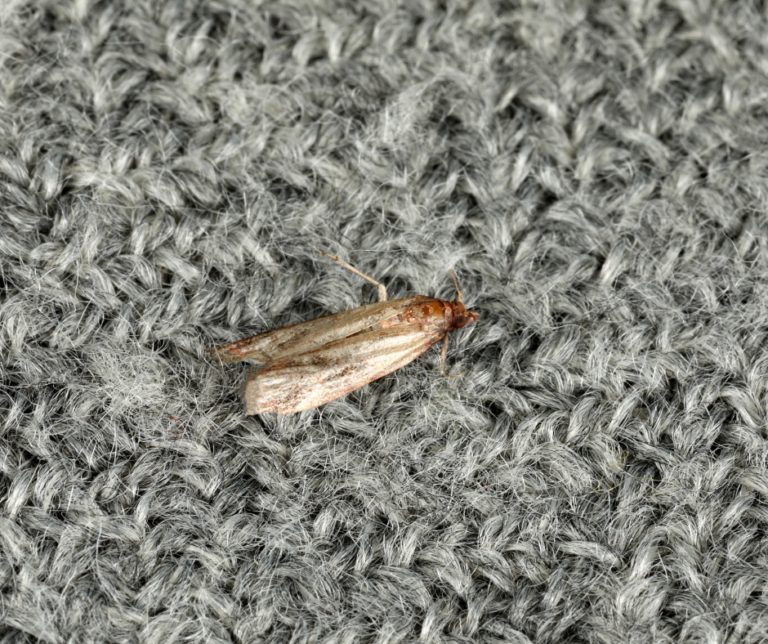
| The adult | Small, drab, a poor flier, keeps low | Small, rounded, mottled; often found at windows |
| Damage pattern | Grazed patches where the carpet is undisturbed | Similar, plus irregular holes in stored textiles |
| Common route in | Already present, or carried in on textiles | Frequently flies in from outside — they feed on pollen as adults |
The route in is the other practical difference. Carpet beetles regularly arrive through an open window — the adults feed on pollen and nectar and are often found on windowsills trying to get back out — which is why they turn up in properties with no history of a problem and no second-hand textiles. BPCA go as far as saying carpet beetle larvae have outstripped the clothes moths as the major British textile pest.
The moths flying around the room are not eating your carpet.
Adult clothes and carpet moths do not feed on fabric at all — several species barely feed as adults. Their job is to mate and lay eggs. All of the damage is done by the larvae, which hatch out and feed on keratin: wool, silk, fur, feathers and animal hair.
Which is why swatting the moths, or hanging a strip that catches them, does not save the carpet. By the time you see an adult, the eggs are already down in the pile.
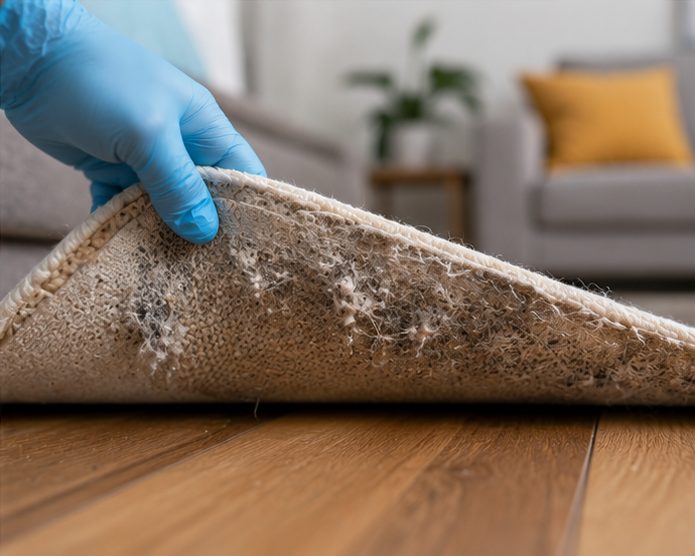
It also explains the pattern of damage. Larvae feed where they are undisturbed, so you find them:
Middle-of-the-floor damage in a busy room is unusual. If you want to know whether you have a problem, look in the places nobody walks.
Carpet moth work depends more on the householder than most treatments do.
Storing clothing unwashed is the commonest source of a wardrobe infestation. Body oils and perspiration on wool make it considerably more attractive than clean fabric.
Tell us what you have found. We confirm the treatment and the price before anything is booked.
Professional treatment of an active nest, wherever it is on the property.
Read the guide →For when you know something is there but not what it is.
Read the guide →Finds and treats the source, for homes and commercial premises.
Read the guide →Closing the ways in — the part that stops rodents coming back.
Read the guide →Thorough treatment of the harbourages, not just the mattress.
Read the guide →Treats the property, because treating the pet alone rarely works.
Read the guide →Tell us what you have seen and where, and we will give you the treatment and the price before we book anything.