£220 First Room, £60 Each After

How Much Does Flea Treatment Cost in Cambridge?

£220 for the first room, £60 for each one after — and the reason a treated pet does not fix a flea problem is that most of the infestation is not on the animal at all.

Flea Control Cambridge

£220

First Room

Flea treatment in Cambridge is £220 for the first room and £60 for each additional room, covering the property rather than the animal.

That distinction is the whole subject, so it is worth explaining properly.

Why Treating the Pet Is Not Enough

At any given moment only a small fraction of a flea infestation is actually on the animal. The rest — eggs, larvae and pupae — is in the environment: in the carpet pile, in upholstery, down the sides of cushions, in the gaps between floorboards and, above all, wherever the animal habitually sleeps.

Eggs are laid on the animal but are not sticky, so they fall off wherever it goes. They hatch into larvae that avoid light and work their way down into the pile, feed on organic debris, and then spin a cocoon.

Which is where the difficult part begins, and it is the reason flea jobs are misunderstood.
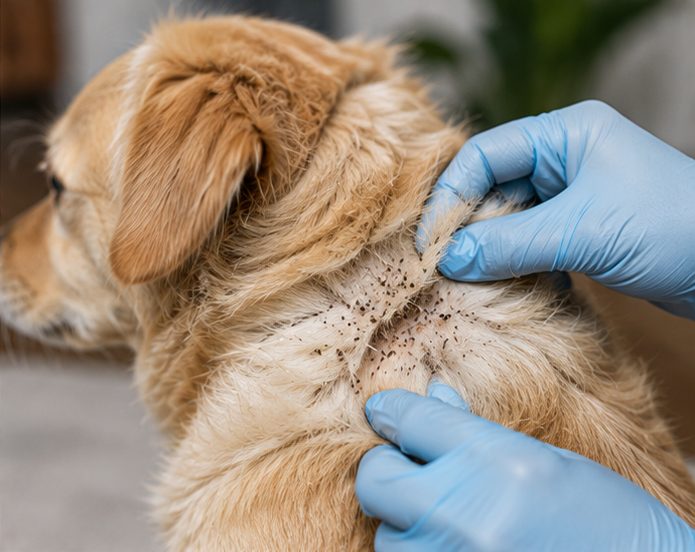
Checking a dog's coat for fleas and flea dirt — treating the animal is only part of the job

The Pupae Are the Problem

The cocoon is protective. It is sticky, it picks up debris that camouflages it, and it substantially resists insecticide — which is why no single treatment can kill everything in a property on the day it is applied.

More importantly, the adult flea inside can stay in there, dormant, waiting. It emerges in response to signals that mean a host has arrived: vibration, warmth, and the carbon dioxide of something breathing nearby.

Which explains the classic scenario. A house stands empty for a fortnight — a holiday, a rental void, a probate property. No footfall, no vibration, no carbon dioxide, so nothing emerges and the pupae accumulate. The day somebody walks in, they all get the signal at once. People describe it as the fleas “appearing from nowhere”. They were there the whole time.

So Keep Using the Rooms — but Do Not Vacuum Them

This is the instruction people find counter-intuitive, and it is two instructions that sound like they contradict each other. They do not.

Keep walking through the rooms

Once the treatment has been applied and has had the time we specify to dry, use the rooms normally. BPCA describes the emerging adult as waiting inside the cocoon until it detects the vibrations caused by a person or animal, and notes it can also detect pressure, heat, noise or carbon dioxide. Ordinary footfall is exactly that signal, and it brings them out onto a treated surface.

Shut the room up instead and the fleas simply wait, past the useful life of the treatment, and emerge later.

But do not vacuum or wash the carpet

This is the part people get wrong, and it matters. BPCA's guidance is unambiguous: once treatment is complete it is critical you do not wash or vacuum your carpets for a minimum of two weeks — longer if possible. Vacuuming lifts the residual treatment straight back out of the pile, and a carpet that has been vacuumed the day after treatment is a carpet that is no longer treated.

So the two instructions are: walk on it, do not clean it. The vacuuming that helps is the vacuuming you do before we arrive.

  • Vacuum thoroughly before the visit — BPCA notes this removes debris, eggs, larvae, pupae and adult fleas, and it lets the treatment reach the carpet rather than a layer of dust
  • Empty the vacuum outside, into a sealed bag, straight away
  • Then leave the carpet alone for at least a fortnight — no vacuuming, no shampooing, no steam cleaning, no washing
  • Expect to see some fleas in the days afterwards. That is the process working, not failing
  • Tell us if activity has not settled within the period we give you

How the Pricing Works

Rooms treatedTotal
1 room£220
2 rooms£280
3 rooms£340
4 rooms£400
5 rooms£460

The first room carries the survey, the set-up and the travel. Every room after it is treatment time alone, which is why it drops to £60.
Be realistic about the room count. Fleas go wherever the animal goes, and eggs fall off as it moves — so if the cat sleeps upstairs and lies in the lounge, both need doing. Treating one room of a multi-room infestation is the commonest reason a flea job has to be repeated, and it costs more in the end than doing it properly first time.

Before We Arrive

  • Vacuum thoroughly — it physically removes eggs and larvae and starts triggering pupae
  • Empty the vacuum outside into a sealed bag
  • Wash pet bedding hot, or dispose of it
  • Clear the floors so the treatment can reach the edges and the areas under furniture
  • Make sure the animal's flea treatment is current — the property treatment and the veterinary treatment work together, and doing one without the other leaves a route back in
  • Plan for fish and other pets. Tell us what you have — aquariums in particular need covering and the pump turning off, and we will tell you for how long
Landlords and letting agents: an end-of-tenancy flea treatment between occupancies is far easier than one with a household living in it, and an empty property is exactly the situation where pupae accumulate. If a tenant with a pet is moving out, it is worth doing then rather than after the next one moves in.
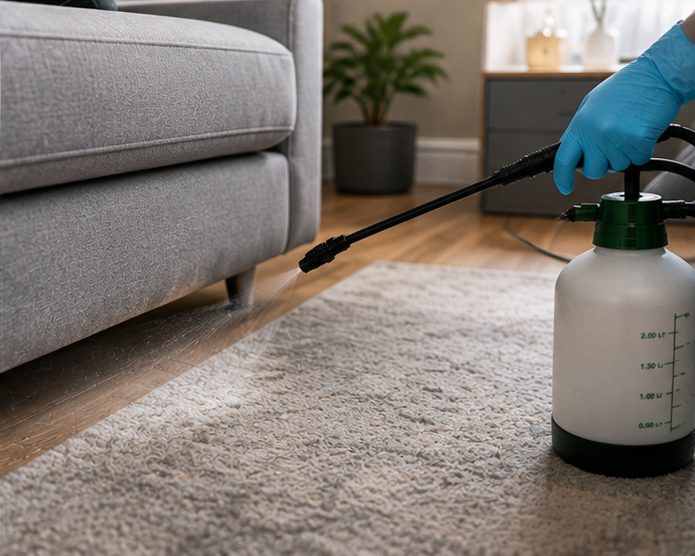
Professional flea treatment being applied to carpet and beneath furniture

Fleas or Bed Bugs?

The two get confused, and the treatments are different.

FleasBed bugs
Where the bites areAnkles and lower legsArms, shoulders, neck, back
WhenAny time you are in the roomOvernight, while asleep
Where they liveCarpet, furnishings, pet beddingBed frame, mattress seams, headboard, nearby furniture
What you findFleas jumping; black specks in pet beddingDark spotting on the mattress seam and frame; shed skins
Pet involvedUsuallyNo — nothing to do with pets

Flea Treatment Cost — Common Questions

How does the per-room price work?
£220 covers the first room and £60 covers each additional room. One room is £220, two is £280, three is £340. We confirm how many rooms need treating and the total before booking.
Which rooms need treating?
Wherever the animal goes, which is usually more of the house than people expect. Fleas drop off as eggs wherever the pet walks and sleeps, so a cat with the run of the house means several rooms rather than one.
I have treated my cat. Why are there still fleas?
Because only a small proportion of a flea infestation is on the animal at any moment. The eggs, larvae and pupae are in the carpet, the furnishings and the pet's resting places. Treating the animal deals with the adults on it; the property still has to be treated.
Can I get fleas without having a pet?
Yes. They come in on visiting animals, on clothing, from a previous tenant's pet, or from wildlife in a loft or under a floor. A property empty for weeks can produce a sudden outbreak the day someone moves in.
Why did they all appear the moment I got back from holiday?
Flea pupae can lie dormant, and they emerge in response to vibration, warmth and the carbon dioxide you breathe out. An empty house means no trigger and a build-up of waiting pupae — then you walk in and they all hatch at once.
Should I stay out of the rooms after treatment?
No. Keep walking through them normally — the vibration is what brings the remaining fleas out of their cocoons onto the treated carpet. But do not vacuum or wash the carpet: BPCA is explicit that for at least two weeks after treatment you should not, because it removes the treatment that is still doing the work.
So do I vacuum or not?
Thoroughly before we treat, and then not at all for at least two weeks afterwards. Those are opposite instructions for a reason — beforehand vacuuming removes eggs, larvae and debris so the treatment reaches the carpet; afterwards it removes the treatment itself.
Why are the bites on my ankles?
Fleas live in the floor covering and jump upwards, so bites concentrate on the lower legs and ankles. Bites on the arms, shoulders and back while sleeping point at bed bugs instead.
Do I need to throw out the carpet?
No. Treatment deals with the infestation in the floor covering.
What about the pet's bedding?
Wash it hot, or dispose of it. Pet bedding and favourite resting spots hold the highest concentration of eggs and larvae anywhere in the house.

Get a Price for Your Property

Tell us what you have found. We confirm the treatment and the price before anything is booked.

Other Pest Control Prices in Cambridge

All pest control prices →

Need Help With Flea Control in Cambridge?

Tell us what you have seen and where, and we will give you the treatment and the price before we book anything.