Rat Control in March
£260
The service page for March — what we do, what it costs and what to expect.
See the service →Rat Control — March
Rats are mostly active after dark. One out in daylight is telling you something, and it is usually not good news.
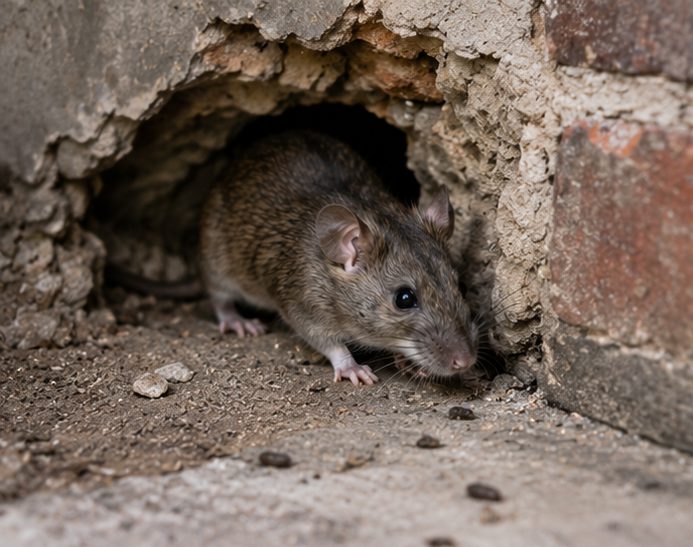
This is the sign people most often dismiss and most often should not. A single sighting in broad daylight is worth more diagnostic weight than most of the other evidence on its own.
A rat's ordinary pattern is nocturnal, and for good reason: it is safer. An animal out in daylight is doing something outside its preference, and there is usually a reason.
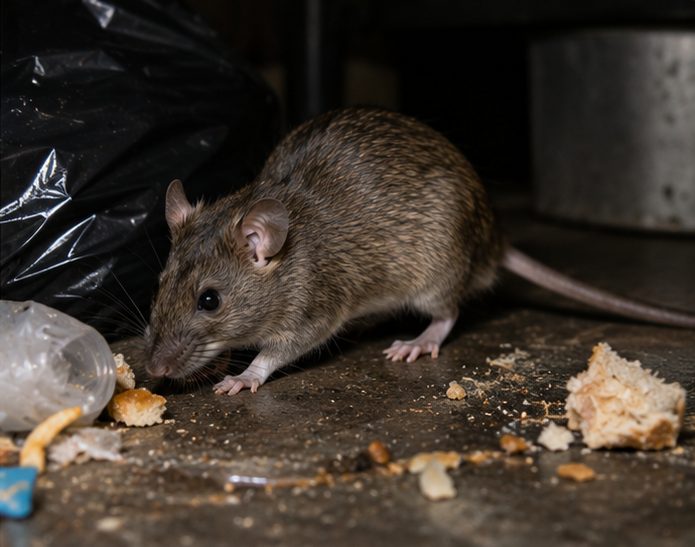
| What you saw | How much it means |
|---|---|
| One animal, once, at dusk, at the end of the garden | Little on its own. Look for other evidence |
| One animal, in daylight, crossing the garden | Worth investigating properly |
| Repeated daytime sightings, same area | An established population. Act |
| A rat indoors, at any time of day | Act. Indoor activity does not resolve itself |
| Several animals at once, in daylight | A substantial population, and the food source is probably obvious |
| An animal that appears unwell or unafraid | Keep children and pets away, and deal with it |
A daytime sighting does not tell you how many rats there are, and nobody can give you that number from a description. What it tells you is that the situation is likely to be more than one animal, and that going and looking properly is warranted.
Where you look and find nothing at all, a pest inspection and survey is a fixed cost and settles it — including the perfectly good outcome that there is nothing established on the property.
Tell us what you have found and where. We confirm the treatment and the price before anything is booked.
The service page for March, the other advice for this area, and every price we charge.
The service page for March — what we do, what it costs and what to expect.
See the service →Not every sighting is an emergency and not every sighting is nothing. The decision is usually clearer than people think.
Read the guide →Once the identification is settled, the next question is how to clear it up. The instinctive method is the wrong one.
Read the guide →Treating the house while a population lives under the decking is like bailing a boat without looking for the hole.
Read the guide →Every price we charge, what it covers and what happens on the day.
Read the price guide →The main Rat Control Cambridge page covers the service in full.
Tell us what you have seen and where, and we will give you the treatment and the price before anything is booked.